

This month: A government shutdown turns off official data, but not the economy. Investors pivot to private signals—revealing how “public” information is anything but equal. We explore the market’s new data divide, the simplest life lesson most adults never learn, and why survival quietly outperforms genius.
Alternative Data, Alternative Truths
When Washington shuts down, Wall Street doesn’t wait.
With government data frozen and no payrolls, CPI, or retail sales coming out, investors simply turn elsewhere. Apollo’s latest analysis shows how much “elsewhere” there is. The modern market runs not on a single feed of official numbers but on a living nervous system of private signals: credit card swipes, restaurant reservations, hotel occupancy, and even Statue of Liberty foot traffic.
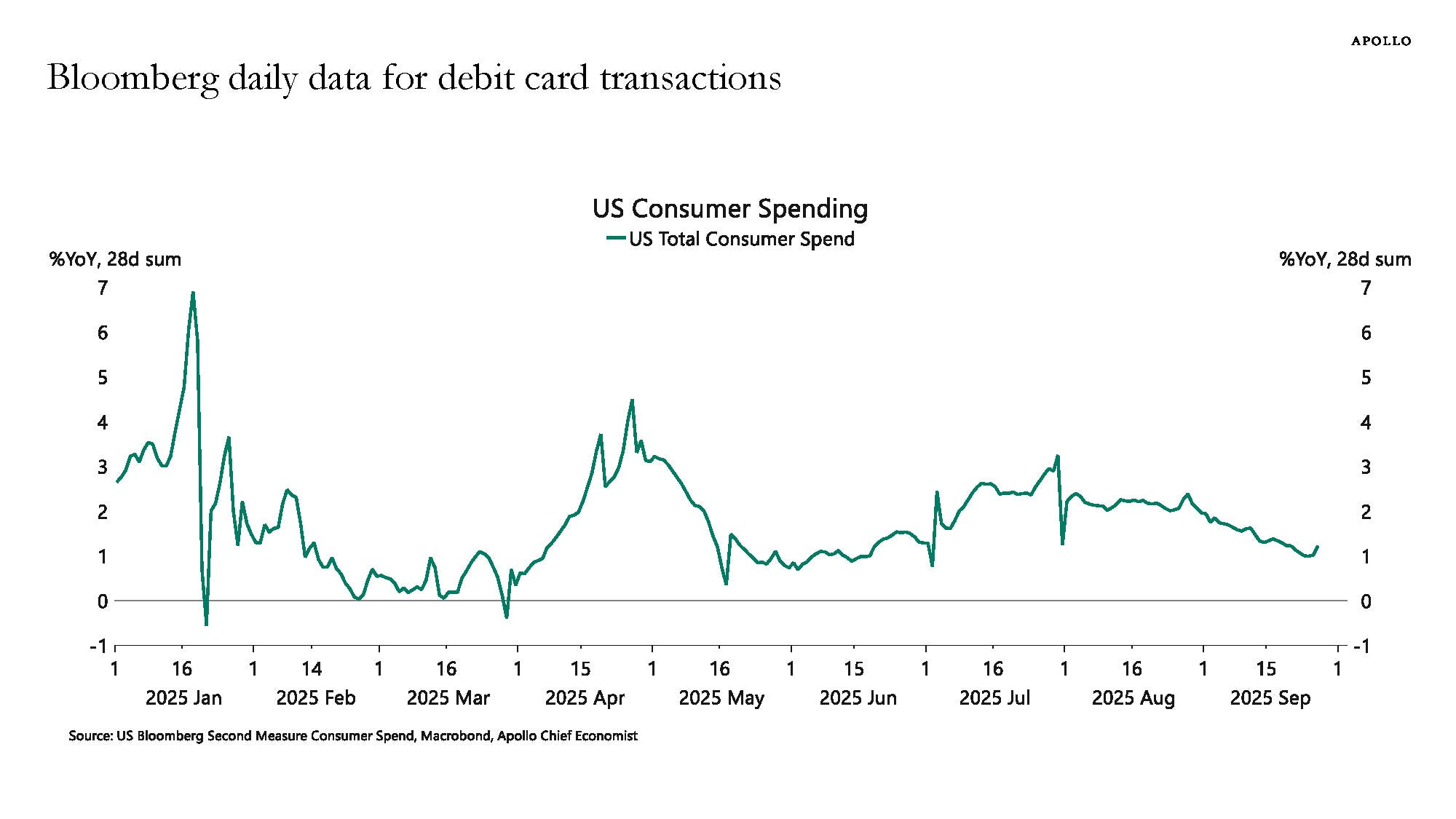
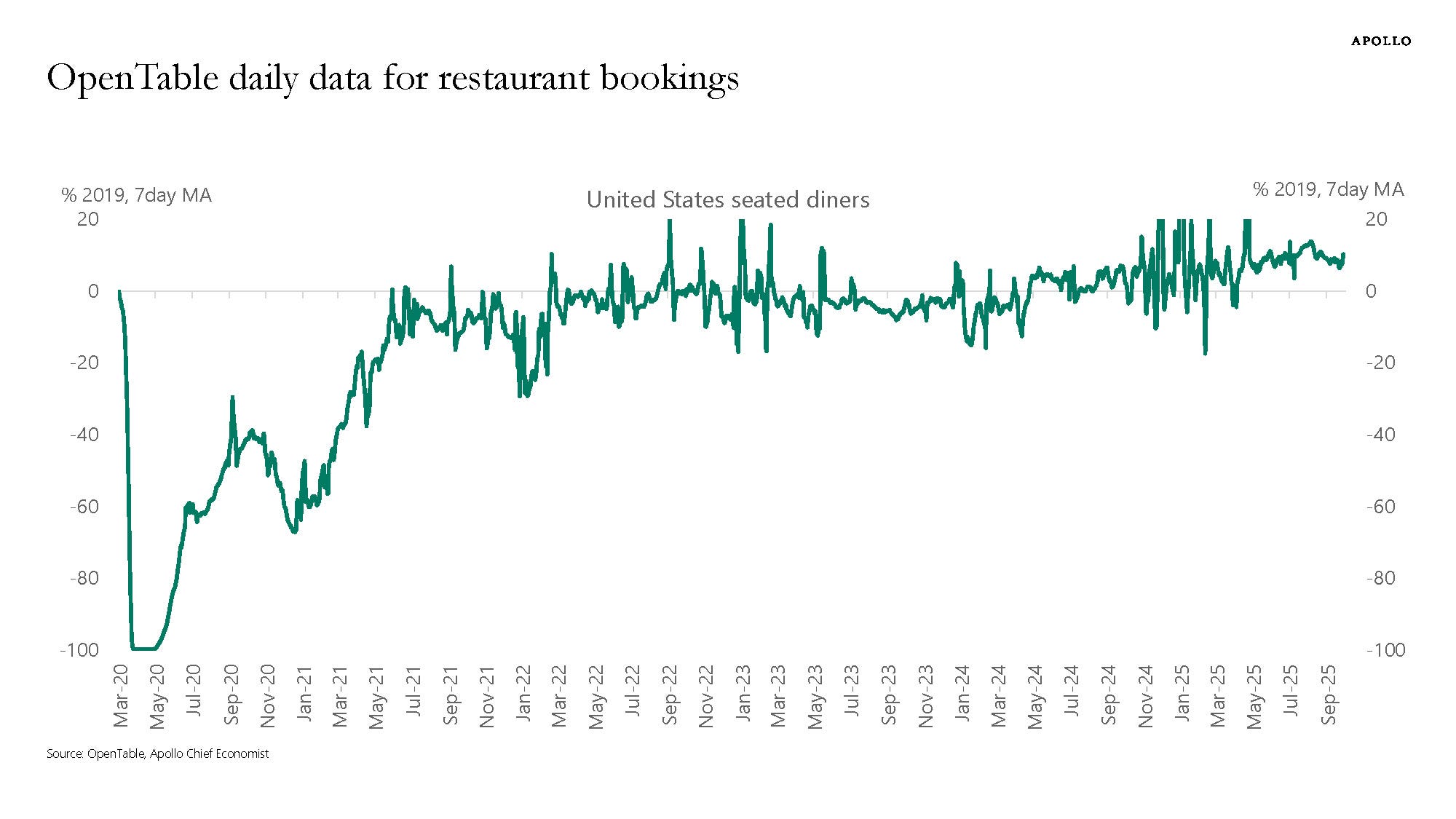
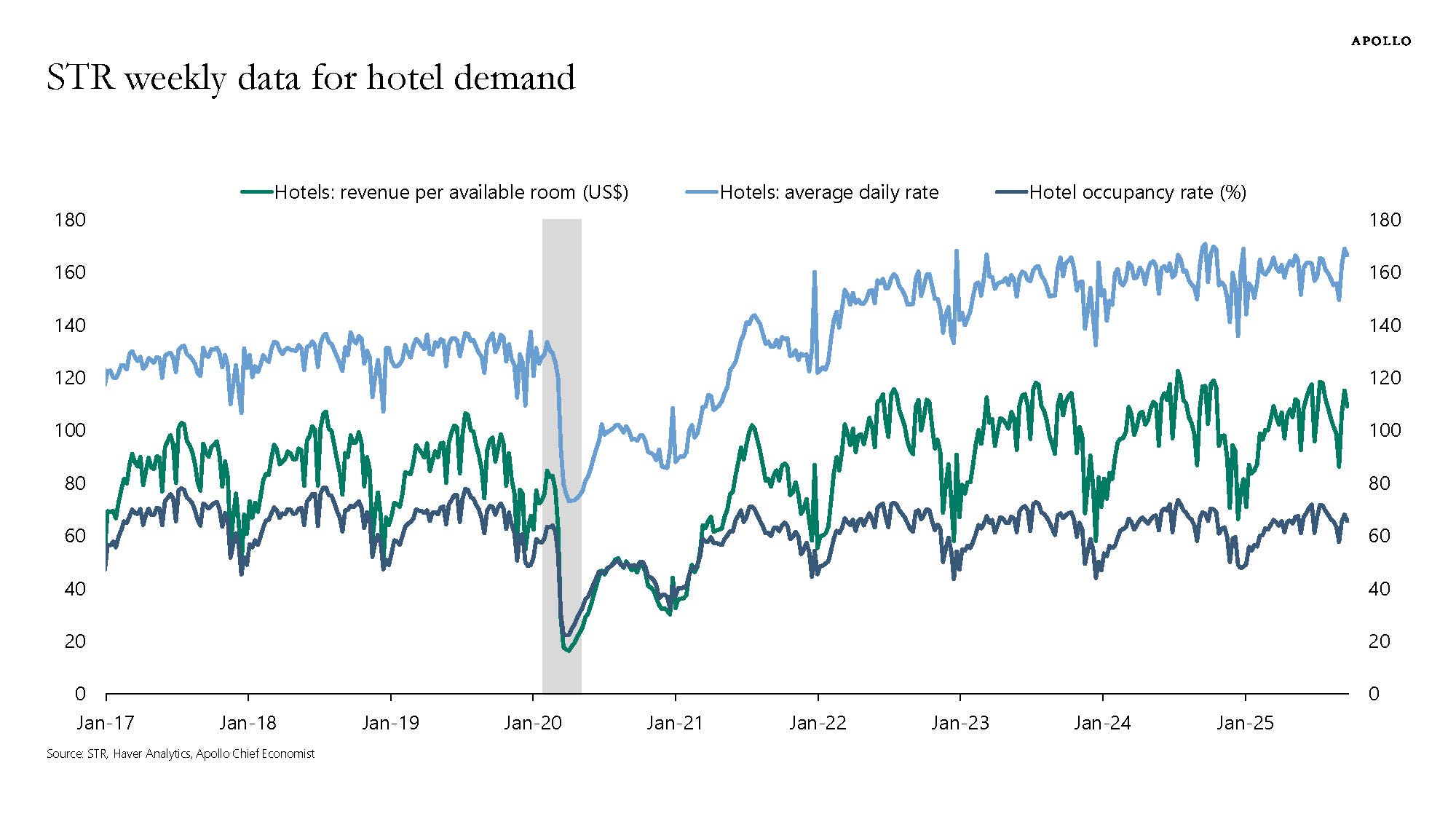
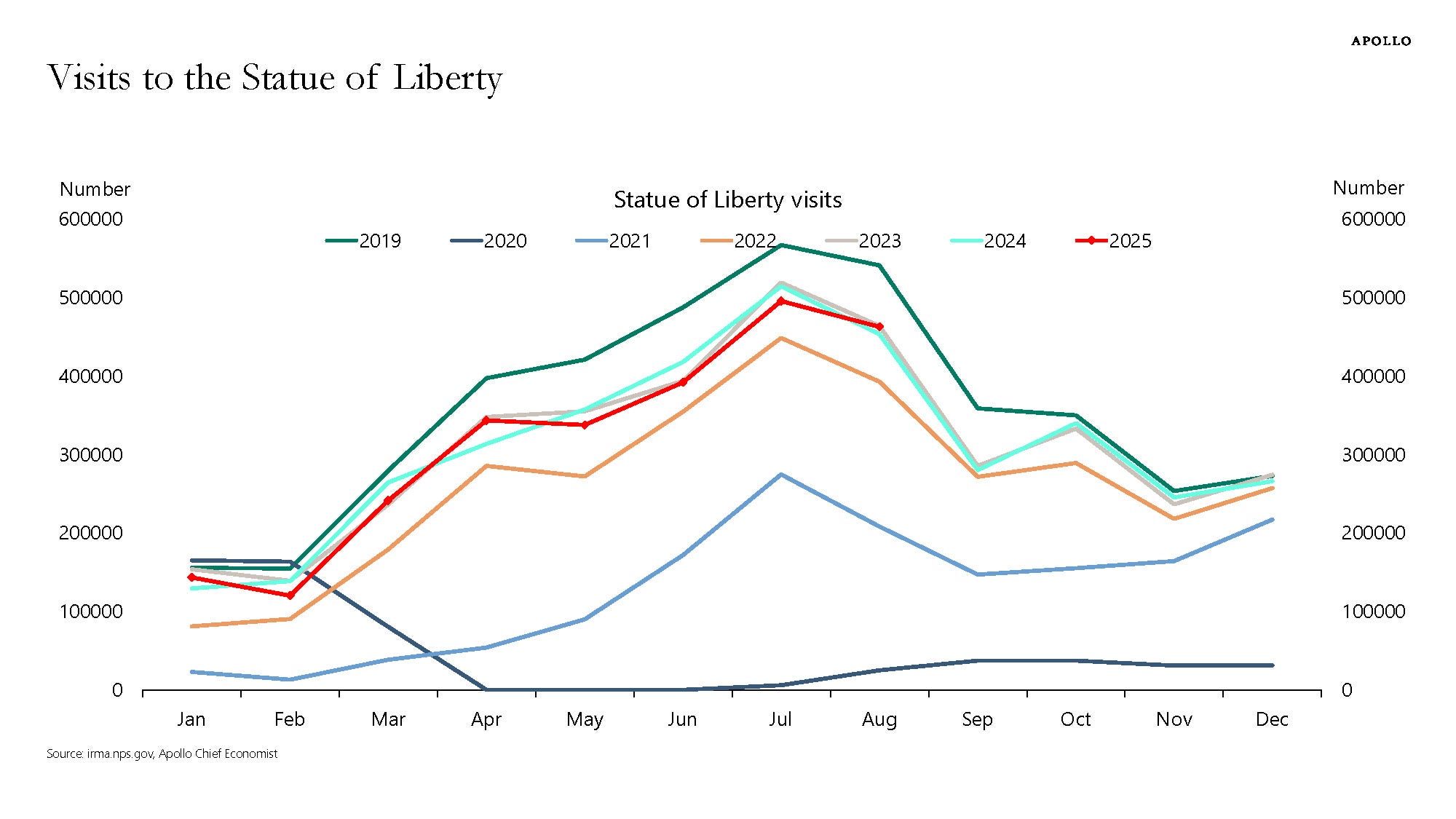
Source: Alternative Data During the Shutdown
If that sounds exotic, it’s already the norm. Hedge funds have been doing this for ages. They parse OpenTable data to gauge discretionary spending, scan Redfin listings for housing momentum, and watch ADP payrolls before BLS reports. But in the past few years, the creativity, compute, and cost have gone vertical.
Today, algorithms read the economy like an open-world game.
AI models transcribe and analyze CEOs’ voices during earnings calls, detecting microhesitations, tonal shifts, and facial tension invisible to human ears or eyes.
Satellites count the number of cars in factory parking lots to model industrial production before it hits earnings.
Freight-tracking data from the World Container Index and the Association of American Railroads feed inflation forecasts long before the Fed publishes them.
Web-scraped prices from millions of SKUs paired with AI guesses about each product’s country of origin map inflation dynamics in real time.
Glassdoor reviews are mined to anticipate corporate performance. When employees start venting online, hedge funds quietly trim exposure.
Social media text sentiment, scraped and vectorized, offers early reads on consumer confidence weeks ahead of survey data.
These aren’t gadgets for hobbyists. They’re multimillion-dollar systems demanding armies of data engineers and enormous compute budgets. The new information hierarchy isn’t built on insider tips. It’s built on infrastructure. The advantage no longer belongs to the best analysts, but to those who can afford to see the world in higher resolution.
And that’s the quiet tension in today’s “public” markets. The data may be technically public and legally accessible, but practically, it isn’t. Not everyone can rent a satellite, buy geolocation data, or run transformer models across millions of transcripts. So while regulators argue about insider trading, the more relevant question might be: what’s the difference between material nonpublic information and information that only the wealthy can meaningfully process?
In the 1990s, it was a phone call from an investment banker.
Today, it’s a $10 million compute cluster listening to the same public conference call as everyone else—and hearing something the rest of us can’t.
The shutdown may pause the official story, but it doesn’t stop the flow of truth. It just reminds us who’s actually plugged into it.

The Balloon Lesson
We’ve all seen it happen. A kid gets a balloon and couldn’t be happier. The parent says not to let go, but the kid does anyway. It slips away and starts to rise. They both watch it drift higher and higher until it’s just a dot. The kid cries and wants it back, but it’s gone for good.
Every parent knows that moment. Every adult has lived it. The lesson seems simple. Some things, once gone, do not come back. But simple isn’t easy. Most of us spend our lives learning that truth, forgetting it, and trying again. Some never learn it at all.
The childhood balloon is one of the first times we face that reality. We can’t bargain or shout or reach high enough to fix it. We just have to let it go. The same test follows us through life. The trade that went wrong. The deal that slipped away. The person who left. We keep trying to pull back what’s already out of reach.
The people who do best in life and in markets aren’t the ones who never lose their balloons. They’re the ones who accept loss without wasting energy fighting gravity. They focus on what’s still within reach. That’s what separates good investors from reckless ones and calm leaders from emotional ones. It’s not detachment. It’s discipline.
From the Field: Staying in the Game
In a meeting with colleagues last week, I quoted Warren Buffett. His point was simple. In business and investing, survival matters more than brilliance. You don’t need to predict every turn of the market. You just need to stay in the game long enough for compounding, reputation, and judgment to do their work.
I added my own spin. Avoiding mistakes is easier and often more valuable than being a genius. You don’t have to outsmart every peer or call every cycle right. You just have to avoid the few errors that end the story early.
Teams often overindex to the upside. New strategies. New bets. New growth plans. But real discipline comes from subtraction—removing the decisions that can cause lasting damage. That isn’t fear. It’s endurance.
The market rewards those who stay solvent, not those who sound smart. Genius is optional. Survival compounds.
Signal vs. Noise
Surveillance Capital — Investors now read satellite photos the way they once read 10-Ks. Factory parking lots, shipping lanes, and even roof colors feed AI models of global demand. The newest edge is literally in the clouds.
The Middle Holds — Despite political theater and data blackouts, Apollo’s composite indicators show steady consumer activity and easier financial conditions. The “soft landing” may be less a miracle than a slow adaptation.
Trust Premium — In a market where anyone can see anything, reputation is the last true moat. Data builds models; character builds multiples.
One Last Thing
The market has always been unequal, but the new divide isn’t information versus ignorance—it’s bandwidth versus constraint. Access to truth now scales with compute, and that should make every investor uneasy.
If this letter resonated with you—or you want to keep this conversation going—I’d love to hear from you.
Until next month,
— Zachary